I'm Junaed Numan, a Senior Product Designer with 11+ years of experience. I design products for complex domains: compliance, SaaS, fintech, HR tech, where workflows, data, and business logic intersect. I work end-to-end with product and engineering, from discovery through delivery.
Senior Product Designer with 11+ years across B2B SaaS, enterprise, compliance tech, and mobile, mostly the kind of products where the domain is complex, the users are experts, and there's no room for confusion.
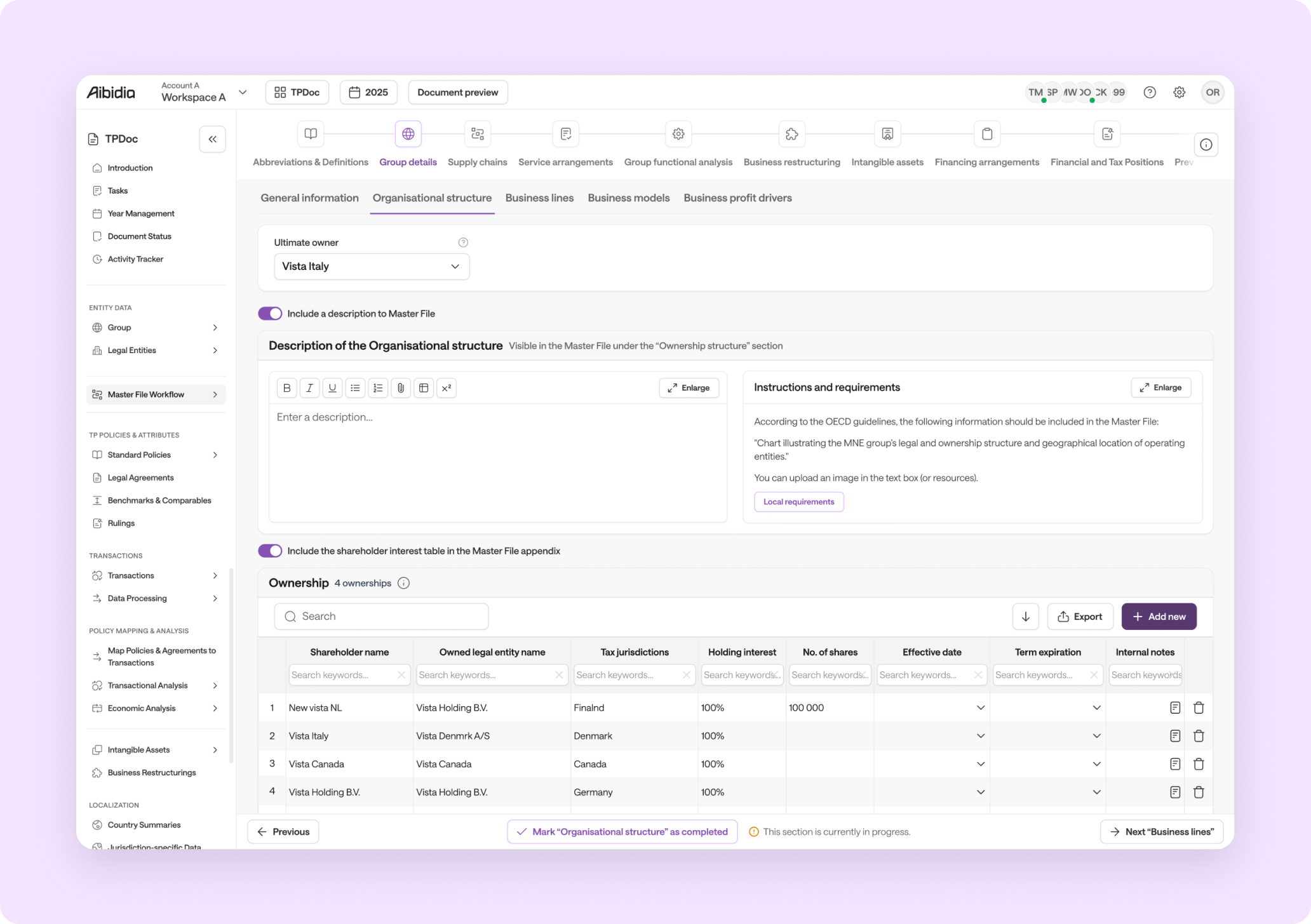
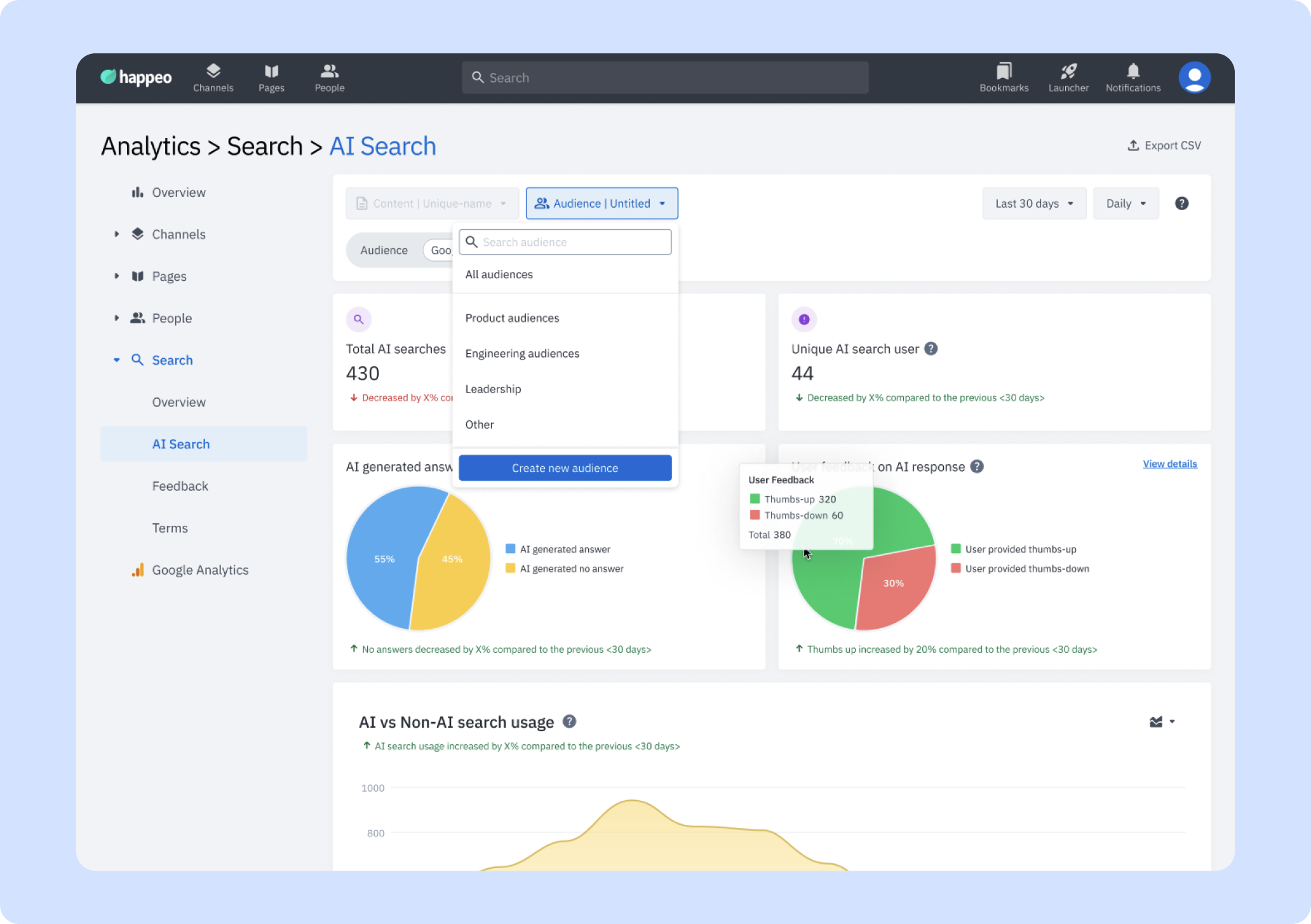
At Aibidia, I design workflows for transfer pricing and tax compliance, a space where finance, law, structured data, and UX all overlap. Before that, at Happeo, I owned analytics, search, people systems, and admin tools used by organisations with 46,000+ employees.
I use AI-assisted workflows across my process: synthesis, workflow exploration, and front-end prototypes for interactions that are hard to show in static Figma. I'm deliberate about where it speeds up real thinking, and where cutting corners would cost users trust or control.
Transfer pricing documentation scattered across disconnected sections, no progress visibility, users finishing in Word. Redesigned as a guided progressive workflow, 100% task success in Maze testing, 8.8/10 usability score.
Enterprise admins had analytics data but no way to filter it by department, location, or content type. Designed a unified filtering architecture used by orgs with 46,000+ employees, 100% task success, 8.5/10 ease-of-use.
Admins couldn't manage users at scale: no bulk actions, unclear statuses, broken OU inheritance. Redesigned the full settings IA and interaction layer, with close engineering collaboration on edge cases and state complexity across 46,000+ employee orgs.
From early discovery through delivery: research, product thinking, UI design, and systems that hold up under real engineering constraints.
User interviews, usability testing, competitive analysis, and journey mapping to ground design decisions in real evidence.
High-fidelity interfaces with strong visual hierarchy and accessibility, designed in Figma with developer handoff in mind. Edge cases, states, and real data, not just the happy path.
Scalable component libraries and design tokens that align design and engineering, built to handle edge cases, not just the happy path.
Native iOS and Android experiences following platform conventions, designed for real-world usage patterns and edge cases.
I build front-end-aware prototypes to communicate complex interactions, reduce design ambiguity, and close the gap between design intent and shipped product quality.
Stakeholder alignment, design critique, and problem framing, plus knowing when to use AI to move faster and when product judgment has to stay human.
Working closely with Junaed for two years, I consistently witnessed his outstanding professional capabilities. He has a strong user-centered focus with deep experience balancing user research, market needs, technical requirements, and solution feasibility through iterative improvement.
Read full on LinkedInJunaed is one of the most collaborative and thoughtful designers I've worked with. He consistently delivers great user experiences while keeping engineering constraints in mind. His attention to accessibility and systematic thinking really elevates the quality of everything he ships.
Read full on LinkedInJunaed has an exceptional ability to balance user needs with business goals. Working with him was a pleasure, his research-first approach, clear communication, and design quality consistently raised the bar for the whole team.
Read full on LinkedIn
A structured approach, not a rigid one. I start with deep understanding: research, stakeholder input, and problem framing before any design work begins. Getting the problem right matters more than moving fast.
From there I explore ideas using AI tools and rapid prototypes, not to shortcut thinking, but to test assumptions early and reduce the cost of being wrong. That exploration feeds into a clear problem definition with aligned goals and measurable outcomes.
Then: iteration and validation. Design decisions get tested, challenged, and refined. The process ends with close collaboration through delivery, because a good design that ships badly doesn't count.
AI accelerates parts of my process. It doesn't replace research, user validation, or product judgment.
Faster synthesis of interview notes, patterns, and themes, without skipping the actual reading.
Generating workflow alternatives and IA options early, before committing to a design direction.
AI-assisted front-end prototypes for complex interactions that are hard to communicate in static Figma.
Reviewing copy, error states, and edge conditions easy to miss in complex multi-step flows.
Human-led. Research and product judgment stay mine. AI doesn't decide what ships.
I'm looking for senior product design roles where the problem space is genuinely hard, enterprise software, complex workflows, or data-heavy tools where clarity actually matters.